Vedic Marriage Rituals and Their Meanings
An Unfolding of Time-Honoured Traditions
Imagine being part of a ceremony that has been treasured and performed for thousands of years. A ceremony that beautifully intertwines faith, spirituality, and shared commitment, culminating in the sacred union of two souls. This is precisely what you experience at an Arya Samaj wedding ceremony, where every ritual is a vivid illustration of Vedic principles. In this exploration of Vedic Marriage Rituals and Their Meanings, you’ll discover the profound symbolism that underlies each stage of this mesmerizing event.
The Purity and Purpose of the Vedic Fire
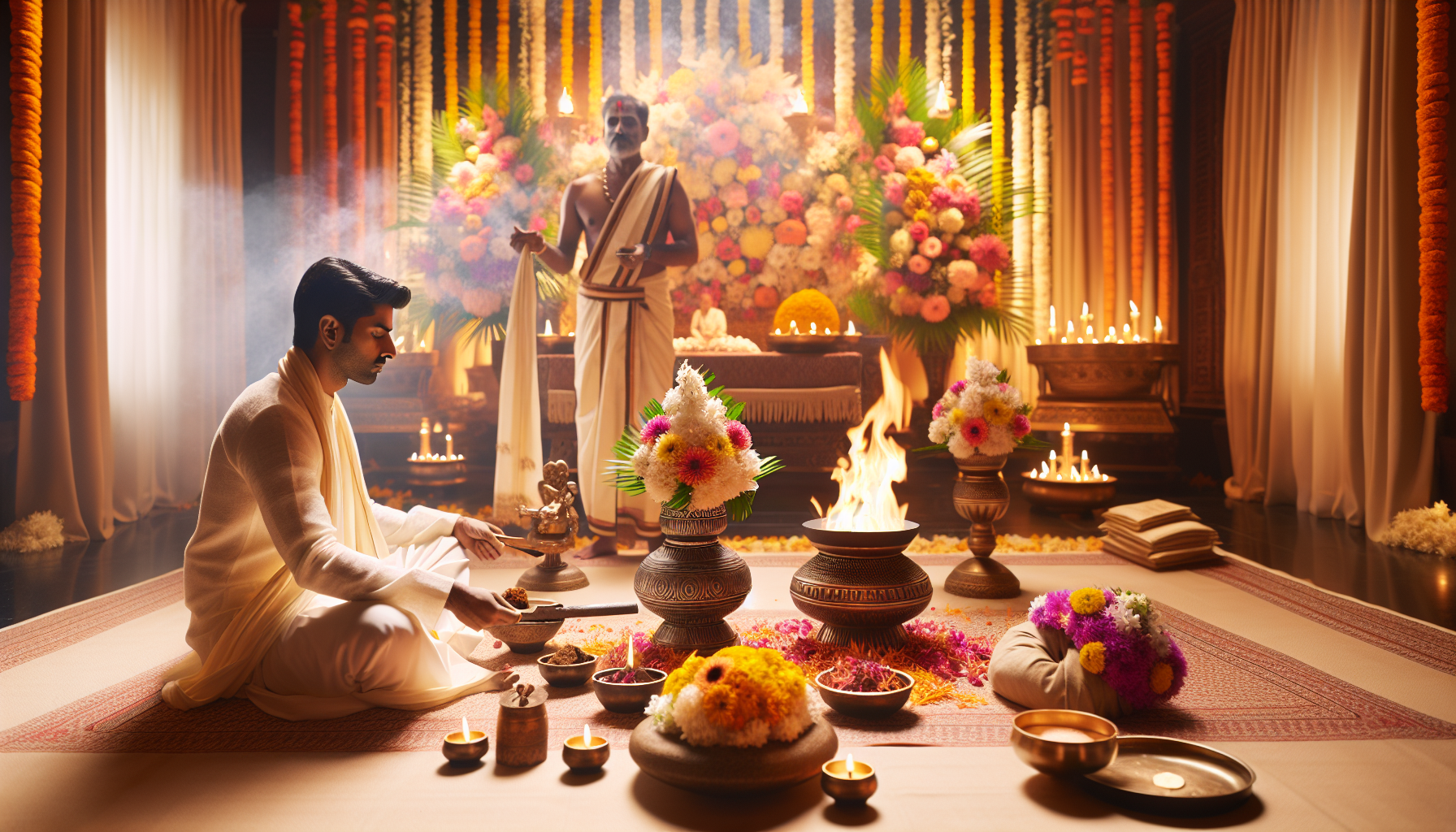
A central and unmissable feature of Vedic wedding ceremonies is the holy fire or Agni. But why is it so crucial, and what does it signify? As you might already wonder, fire is revered as a divine witness in the Vedic tradition. The holy fire is said to purify, illuminate, and guide the couple on their new journey. Indeed, in the captivating ritual known as Agni Puja, fire is worshipped as a god. Every flame, every flicker is imbued with divine presence and warm blessings.
The Profound Symbolism of Kanyadaan
Among the multitude of rituals, Kanyadaan holds a place of prominence. It is considered one of the highest honours a parent can perform. At this stage, the bride’s parents entrust their beloved daughter into the groom’s care, symbolizing the joining of two families. But the Vedic Marriage Rituals and Their Meanings extend far beyond mere symbolism. For instance, a knowledgeable Arya Samaj Pandit like Brahmdev Vedalankar Ji would explain that Kanyadaan also represents the parents’ wish for the couple’s spiritual upliftment, reinforcing the idea of marriage as a journey towards enlightenment.
Unraveling the Seven Steps – Saptapadi
The Saptapadi or the ‘seven steps’ is a ritual that beautifully encapsulates the essence of marital vows. The couple walks around the holy fire seven times, each round signifying a specific commitment towards love, prosperity, and mutual respect. Pandit Brahmdev Vedalankar Ji often emphasizes that this ritual is not just a symbolic act, but a powerful pledge of lifelong partnership and mutual growth. With each step, the couple promises to share responsibilities, remain faithful, and nurture their family with love and care.
The Hidden Meanings Behind the Sindoor Ritual
Ever wondered why the groom applies Sindoor or vermilion on the bride’s forehead during the wedding ceremony? The act serves more than a social identifier of marital status. It has profound Vedic implications too. Sindoor, made from turmeric, lime and metal such as mercury, is believed to activate the ‘Agya Chakra,’ a powerful energy point said to deepen feelings of love, respect, and commitment in the couple’s life.
Unveiling the Mystery of Saat Vachan
Known as the seven vows, Saat Vachan is an integral part of Vedic Marriage Rituals and Their Meanings. These are promises the couple makes to each other, sanctifying their bond. The vows encompass various aspects of life and are intricately tied to the Saptapadi. They pledge to honour each other, to share joy and sorrow, to trust and respect each other, and to nurture a family rooted in love, understanding, and spiritual growth.
Understanding the Depth of Mangalsutra
The act of the groom tying the Mangalsutra or the sacred necklace around the bride’s neck resonates with deep symbolic meanings. Composed of two strings of black beads with a gold pendant, the Mangalsutra is more than a piece of jewellery. It signifies the inseparable bond between the couple, their shared commitment, and the protection they offer each other. It’s a visual reminder of the sacred vows they’ve taken and the spiritual journey they’ve embarked upon together.
A Final Thought on Vedic Marriage Rituals and Their Meanings
Arya Samaj weddings, steeped in Vedic principles, aren’t just about the pomp and glamour typically associated with Indian weddings. They represent a sacred journey towards spiritual growth, mutual respect, and lifelong companionship—each ritual, each prayer, and every ritualistic object carries profound symbolic implications. With the guidance of a knowledgeable and humble Arya Samaj Pandit like Brahmdev Vedalankar Ji, these rituals can elevate a wedding ceremony from a mere social event to an uplifting spiritual experience.
You Might Also Find These Helpful
- Step-by-step guide to Arya Samaj wedding ceremony
- Vedic view on caste
- Why modern marriages don’t last: A Vedic perspective
📞 Book Pandit Brahmdev Vedalankar Ji for Your Ceremony
Serving families across Noida, Ghaziabad & Greater Noida West

Pandit Brahm Dev Vedalankar Ji is a revered Arya Samaj scholar known for his deep Vedic knowledge and dedication to promoting the teachings of Maharishi Dayanand Saraswati. His profound wisdom, inspiring discourses, and commitment to truth and equality have made him a guiding light for many, fostering spiritual growth and social harmony.